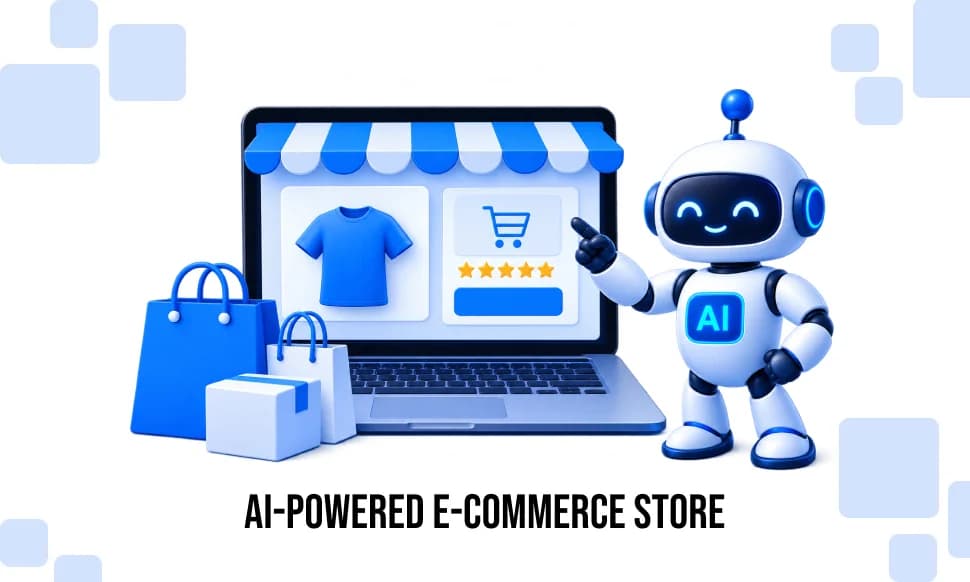
Not all AI features move the needle. This guide tells Indian D2C brands exactly which ones do, what they cost, and in what order to build them.
The Store That Learned What Its Customers Wanted
Two years ago, a D2C sports equipment brand we work with was running a standard WooCommerce store. Good products. Decent traffic. Mediocre conversion. Their homepage looked the same for everyone — a rotating banner, featured products, latest arrivals. Standard template execution.
We rebuilt their store with an AI-powered product recommendation engine. After 30 days of training on their purchase and browsing data, the home page started personalising product displays per visitor segment. A user who'd previously browsed cricket equipment saw cricket gear in the featured section. A user whose previous session had included gym equipment saw fitness products.
Three months later: average order value up 22%. Conversion rate up 18%. Return customer visit rate up 31%.
None of this required Amazon-level technology investment. It required a thoughtful implementation of recommendation logic on top of their existing catalogue data.
AI in e-commerce isn't about having the most sophisticated technology. It's about using the data you already have — customer behaviour, purchase history, browsing patterns — to make every visit to your store feel like it was designed for that specific customer.
Want to understand what AI-enabled development actually means before investing in it?
→ AI-Enabled Website Development in India: What It Actually Means, What It Costs, and What to Avoid
The 6 AI Features That Actually Move E-commerce Metrics
1. Personalised Product Recommendations
The most proven AI feature in e-commerce. 'Customers who bought X also bought Y' is the basic form — but modern recommendation engines go significantly further: personalising the home page based on browsing history, adjusting the order of search results based on individual preference signals, and creating 'complete the look' or 'frequently bought together' bundles that reflect actual purchase patterns, not manually curated selections.
ROI expectation: 15-35% uplift in average order value. Timeline to results: 60-90 days after sufficient training data is available.
2. AI-Powered Search
Standard e-commerce search is keyword matching. A customer searching 'running shoes for flat feet' gets results containing those exact words — or nothing. AI-powered semantic search understands the intent and surfaces relevant products even when the exact words don't match product descriptions.
For Indian e-commerce with varied product catalogs and customers who search in Hindi/English mix, semantic search can dramatically reduce search-to-zero-results rates (which correlate directly with exits).
ROI expectation: 20-40% reduction in zero-result searches, 10-15% improvement in search conversion rate.
3. Dynamic Pricing and Promotions
AI-driven pricing that adjusts based on demand patterns, competitor pricing, inventory levels, and customer segment. Not predatory surge pricing — intelligent promotion targeting: showing the right discount to customers who need a nudge to convert, while showing full price to customers with high purchase intent.
For Indian D2C brands competing with large marketplaces, smart pricing that identifies and targets high-intent visitors with personalised promotions can be a meaningful differentiator.
4. AI Cart and Checkout Optimisation
AI that identifies friction in your specific checkout flow and suggests targeted interventions: personalised trust badges for customers in their first purchase (addressing hesitation), pre-filled shipping details for returning customers (reducing friction), intelligent shipping option recommendations based on order value and location, and dynamic cart recovery messages that are tailored to what was in the cart.
5. Conversational Commerce
An AI-powered chat interface that helps customers find products through conversation: 'I'm looking for a gift for my mother who likes gardening, budget around ₹2,000.' A recommendation engine responds with contextually appropriate product options, answers questions, and guides to purchase.
For high-consideration purchases (electronics, furniture, health products), conversational guidance can address the hesitation that causes cart abandonment better than any static product page can.
6. Predictive Inventory and Demand Intelligence
AI that analyses sales patterns, seasonal trends, and external signals to predict which products will have high demand in the next 30-60 days. Reduces both stockouts (lost revenue) and overstock (tied-up capital). For Indian e-commerce businesses with complex supplier chains, this is a significant operational improvement.
Curious how AI is changing web development beyond just e-commerce?
→ The AI Advantage: How AI Can Be Used to Revolutionize Website Development
What AI E-commerce Costs vs. What It Returns
The Data Foundation: What You Need Before You Build
AI e-commerce features are only as good as the data they train on. Before investing in AI features, assess your data foundation:
- Product data: Are your product descriptions clean, consistent, and detailed? AI recommendations are limited if your catalog data is inconsistent.
- Behavioural data: Do you have at least 6-12 months of purchase history and browsing data? Recommendation engines need training data.
- Customer data: Are your customer records clean and segmented? Do you know who your high-value customers are vs. one-time buyers?
- Analytics infrastructure: Do you have event tracking set up properly — add to cart, product view, search queries, checkout steps?
Most small Indian e-commerce businesses are data-poor despite being traffic-rich. Phase 1 of AI e-commerce work is often setting up the data infrastructure that makes Phase 2 possible.
The Recommendation for Indian D2C Brands
Start with AI-powered search and product recommendations — they have the shortest time to ROI, require the least training data, and have the most proven impact on e-commerce metrics.
Add conversational commerce and cart optimisation in Phase 2 when you have 6-12 months of customer behaviour data.
Reserve predictive pricing and demand forecasting for Phase 3 when you have the data volume and internal processes to act on the predictions.
This phased approach is how we've implemented AI e-commerce for clients like God of Sports — building intelligence gradually on a foundation of real data, not implementing everything at once and hoping it works.
Frequently Asked Questions
1. How long does it take to see results from AI product recommendations?
Most stores start seeing measurable improvement in average order value and return visit rate within 60 to 90 days of going live — provided there is at least 6 months of purchase and browsing data available for the recommendation engine to train on. Stores with less historical data may need an additional 30 days before patterns become reliable.
2. What is the minimum data a D2C brand needs before investing in AI e-commerce features?
At a minimum, you need 6 to 12 months of purchase history, clean product catalogue data with consistent descriptions, and basic event tracking set up on your store — add to cart, product views, search queries, and checkout steps. Without this foundation, most AI features will underperform regardless of how well they are built.
3. Can AI-powered search handle customers who search in Hindi or use mixed Hindi-English terms?
Yes. Semantic search engines understand the intent behind a query rather than just matching exact words. This means a customer searching "running joote flat feet ke liye" can still be shown relevant results even if your product descriptions are written entirely in English. For Indian e-commerce, this is one of the highest-ROI problems AI search solves.
4. Is conversational AI chatbot development for e-commerce only suitable for large stores?
No. Conversational AI chatbot development for e-commerce is increasingly practical for mid-size D2C brands, not just enterprise players. A well-built conversational interface that helps customers describe what they are looking for — especially for high-consideration products like electronics, health items, or furniture — can reduce cart abandonment more effectively than any static product page, and the build cost has come down significantly in the last two years.
5. Should we implement all 6 AI features at once or start with one?
Start with AI-powered search and product recommendations. These two have the shortest time to ROI, require the least training data, and have the most documented impact on e-commerce conversion metrics. Add conversational commerce and cart optimisation once you have 6 to 12 months of customer behaviour data. Reserve demand forecasting and dynamic pricing for a later phase when your data volume and internal processes can support acting on the predictions reliably.
Looking for a team that builds e-commerce stores designed to scale from day one?
→ E-Commerce Development That Scales Beyond Sales — 12Grids
Ready to Build an E-commerce Store That Gets Smarter Over Time?
We'll assess your current store, your data readiness, and your catalog. Then we'll design an AI roadmap that starts with what will move your metrics fastest.
→ Email: sales@12grids.com | +91 91379 97497

Kailash Vele
I lead the technology vision and architecture across all our products and client solutions — ensuring that innovation, scalability, and reliability are at the heart of everything we build. From Laravel to AI-powered systems, I work closely with our teams to implement frameworks that are not just functional, but future-ready. At 12Grids, I’m focused on driving engineering excellence, building clean and modular systems, and aligning our tech stack with business goals. Whether it’s launching a SaaS product, streamlining development workflows, or introducing automation for faster delivery, I believe great tech is built when structure meets speed. My core mission: to turn ideas into robust digital ecosystems that deliver real, measurable value.
Connect on LinkedInPut AI to work in your content engine
We design AI-native marketing workflows that ship - not demos.


Get the good stuff, monthly.
One thoughtful email a month - new research, playbooks, and ideas. No noise.