AI search is changing how buyers find businesses — and most Indian brands have zero AEO strategy. This guide covers 7 practical pillars and a free self-audit to help you get cited in ChatGPT, Perplexity, and Google AI Overviews.
The Buyer Who Never Clicked Your Website
A CFO at a mid-sized Indian manufacturing company is evaluating ERP vendors. Ten years ago, she would have typed 'ERP system for manufacturing India' into Google, visited eight websites, downloaded three brochures, and sent enquiries to four companies.
In 2026, she opened ChatGPT and typed: 'What are the best ERP options for a manufacturing company with 200 employees in India? Compare SAP, Oracle, and smaller Indian alternatives.'
ChatGPT gave her a synthesised answer. She compared three options based on that answer. She then asked a follow-up: 'Which of these would you recommend for a company that also needs WhatsApp-based procurement workflows?'
She never searched Google. She never visited your website. If your company wasn't in ChatGPT's answer — you were never in her consideration set.
AEO — Answer Engine Optimisation — is the discipline of making sure your brand appears when AI systems answer questions your potential buyers are asking. It's where SEO is going. And most Indian businesses have zero AEO strategy right now.
AEO vs SEO vs GEO: Clearing Up the Terminology
The field is new enough that terminology isn't settled. Here's how we use these terms:
- SEO (Search Engine Optimisation): Optimising to rank in traditional search engine results — Google's blue links. Still relevant, still important.
- AEO (Answer Engine Optimisation): Optimising to appear in AI-generated answers — ChatGPT, Google AI Overviews, Perplexity, Microsoft Copilot, Gemini. Also called Generative Engine Optimisation (GEO) by some practitioners.
- LLM SEO: The specific practice of optimising to be cited by Large Language Models. A subset of AEO.
For practical purposes in this guide, we'll use AEO to mean all optimisation aimed at AI-mediated discovery — regardless of which specific AI system is generating the answer.
Not sure how AI SEO actually differs from what you are already doing? →
AI SEO vs Traditional SEO: What Indian Businesses Actually Need to Do in 2026
How AI Systems Decide What to Cite (and What to Ignore)
Understanding why AI systems cite some brands and not others requires understanding how they work. Large language models are trained on vast datasets of internet content. When they generate answers, they draw on:
- Training data: Information that was in their training corpus — articles, websites, directories, forums, industry publications
- Real-time retrieval (for systems like Perplexity and Google AI Overviews): Live web search results, weighted by the system's trust signals
- Entity knowledge: Structured information in knowledge graphs (like Google's Knowledge Graph) about businesses, people, and organisations
To appear in AI answers, your brand needs to be present and credible in all three layers. A business that exists only on its own website — no industry directory presence, no external citations, no knowledge graph entity — is largely invisible to AI systems.
The 7 Pillars of AEO for Indian Businesses
1. Entity Definition — Make AI Systems Certain About Who You Are
An 'entity' in AI terms is a clearly defined, consistently described concept. Your business needs to be an unambiguous entity: consistent name, address, phone, website URL, and service description across every digital touchpoint. Inconsistency creates doubt in AI systems — they're less likely to cite an entity they're uncertain about.
Action: Audit every place your business appears online — Google Business Profile, Justdial, IndiaMART, LinkedIn, Clutch, DesignRush — and ensure name, address, and service descriptions are identical.
2. Authoritative Content — Write for the Expert Standard
AI systems are trained to identify expertise. Content that demonstrates genuine, specific knowledge of a domain gets cited more than generic content. This means: specific numbers over vague claims, named case studies over anonymous examples, process explanations over feature lists, and first-person experience over third-person description.
For 12Grids, this means articles like this one — where we share actual client stories, specific cost benchmarks from our own experience, and named processes we use — rank and get cited more than generic '10 tips for web design' posts.
3. Question-Answer Structure — Write How People Ask AI
People ask AI systems questions in natural language: 'How much does it cost to build an app in India?' 'What's the best CMS for a pharma company?' 'How do I choose a UX design agency?'
Your content needs to directly answer these questions — ideally in the first paragraph, followed by detailed support. AI systems extract answers; they reward content that makes extraction easy.
4. Schema Markup — Give AI Systems Machine-Readable Context
Schema markup (structured data) is HTML code that tells search engines and AI systems what your content is about. FAQPage schema makes your Q&A sections extractable. LocalBusiness schema confirms your geographic context. Article schema signals content type. HowTo schema structures process content.
In 2026, schema isn't just for Google Featured Snippets — it helps AI systems understand and trust your content enough to cite it.
5. Citation Building — Get Mentioned Where AI Systems Pay Attention
AI systems weight citations from authoritative sources. For Indian businesses, this means: industry directories (Clutch, DesignRush, GoodFirms for agencies), business publications (YourStory, Inc42, Economic Times), government and institution mentions, and client case studies published on credible platforms.
Every mention of your brand in a source that AI systems consider authoritative increases your citation probability. Traditional link building for PageRank — building AEO citations for AI visibility. The principle is similar; the targets are different.
6. Multi-Platform Consistency — Be the Same Business Everywhere
AI systems cross-reference information. If your LinkedIn says you're a 'UX design company in Mumbai' but your website says you're a 'full-service digital agency in Navi Mumbai' and Justdial says you're in 'Thane' — the AI system treats these as potentially different entities, or as an unreliable entity. Consistent information = confident citations.
7. Review Reputation — Trust Signals AI Systems Use
Google reviews, Clutch reviews, DesignRush ratings, and G2 scores feed into trust signals that AI systems use. A business with 4.8 stars across 80+ reviews across multiple platforms is a more confident citation than one with 3.2 stars on one platform.
This is not a short-term fix. It's a consistent practice of earning and responding to reviews across the platforms your buyers use.
Want to know where your website currently stands before building your AEO layer? →
What Is Website Analysis? How to Analyse Your Website in 5 Simple Steps
What AEO for 12Grids Looks Like — Our Own Practice
We apply everything in this article to our own content strategy. Every pillar article we publish is structured to answer specific questions in AEO-optimised format. Our Google Business Profile, LinkedIn, Clutch listing, and DesignRush profile all describe us identically. Our schema markup is comprehensive.
Is it working? We're starting to see 12Grids appear in AI Overview results for specific Mumbai web development queries. We're tracking Perplexity citations for agency-related queries. It's early, but the signals are consistent: AEO investment compounds over time, the same way traditional SEO investment does.
How to Audit Your AEO Readiness Today (Free Self-Check)
- Open ChatGPT or Perplexity and search for your service category + your city. Does your brand appear? If not, who does? Note what those brands do differently.
- Search for 'best [your service] in [your city]' in Google AI Overview. Same exercise.
- Google your own brand name. Is there a Knowledge Panel? Does the information match your website exactly? Inconsistencies here hurt AI citations.
- Count your external citations: How many industry directories list you with accurate information? How many media mentions can you find? How many genuine review platforms carry your ratings?
- Review your top 5 service pages: Does each one answer a specific question directly in the first 100 words? Do they have FAQPage schema?
Five minutes of honest self-audit here will tell you more about your AEO status than any tool can.
Your audit flagged some gaps before booking a call,
here is what a full AEO and SEO engagement looks like →
F&Q
Q1. What is the full form of AEO?
The full form of AEO is Answer Engine Optimisation. Some practitioners also call it Generative Engine Optimisation or GEO. For practical purposes both terms refer to the same goal — getting your brand cited in AI-generated answers.
Q2. What is the difference between AEO and SEO?
SEO optimises your website to rank in traditional search engine results — Google's blue links. AEO optimises your brand to appear in AI-generated answers on platforms like ChatGPT, Perplexity, and Google AI Overviews. Both are important. Most Indian businesses currently have an SEO strategy but zero AEO strategy.
Q3. How do I appear in ChatGPT or Perplexity results?
To appear in AI-generated answers, your brand needs to be present and credible across three layers — training data, real-time retrieval, and entity knowledge graphs. This means consistent business information across all platforms, authoritative content that demonstrates genuine expertise, schema markup, citations from credible sources, and strong review ratings.
Q4. Is AEO relevant for Indian businesses?
Yes — and most Indian businesses are currently invisible to AI systems. When a buyer searches for your service category on ChatGPT or Perplexity without finding your brand, you are simply not in their consideration set. AEO is where search is heading and early investment compounds over time, exactly the way traditional SEO does.
Q5. What is GEO or Generative Engine Optimisation?
GEO — Generative Engine Optimisation — is another term for AEO used by some practitioners. Both refer to optimising your content and brand presence so that AI systems are more likely to cite you when generating answers. The terms are interchangeable in most practical contexts.
Want an AEO Audit for Your Business?
We'll check how your brand appears across key AI search tools, audit your entity consistency, and give you a prioritised AEO action plan specific to your industry and location.
→ Email: sales@12grids.com | +91 91379 97497

Kailash Vele
I lead the technology vision and architecture across all our products and client solutions — ensuring that innovation, scalability, and reliability are at the heart of everything we build. From Laravel to AI-powered systems, I work closely with our teams to implement frameworks that are not just functional, but future-ready. At 12Grids, I’m focused on driving engineering excellence, building clean and modular systems, and aligning our tech stack with business goals. Whether it’s launching a SaaS product, streamlining development workflows, or introducing automation for faster delivery, I believe great tech is built when structure meets speed. My core mission: to turn ideas into robust digital ecosystems that deliver real, measurable value.
Connect on LinkedInPut AI to work in your content engine
We design AI-native marketing workflows that ship - not demos.
Keep reading
View more →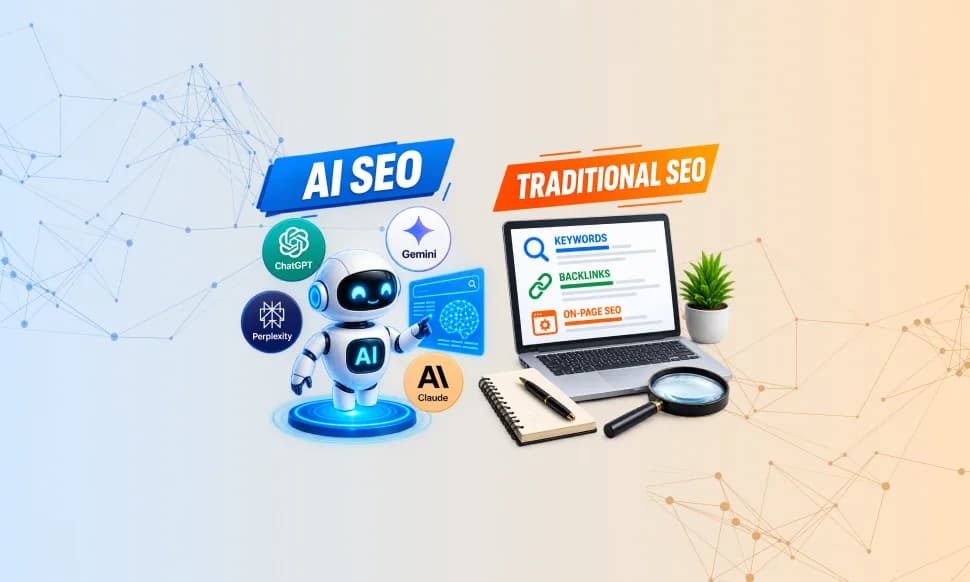
AI SEO vs Traditional SEO: What Indian Businesses Actually Need to Do in 2026
llms.txt: What It Is, Why It Matters for Indian Businesses,and How to Create One Right Now
Product Engineering vs. Software Development: What Founders and CTOs Need to Know Before Hiring
Get the good stuff, monthly.
One thoughtful email a month - new research, playbooks, and ideas. No noise.