



Content Marketing
Meeting Customers Where They Are: WhatsApp As A Sales Channel
20 mins | 11 Mar 2026
_ed5d96cc.png&w=2048&q=75)
When God of Sports approached 12Grids in early 2024, they faced a problem familiar to most e-commerce brands: high traffic, low conversion rates, and cart abandonment exceeding 70%. Despite having quality products and competitive pricing in India's sports equipment market, potential customers were dropping off before completing purchases.
The challenge wasn't product-market fit—it was friction in the buying journey. Customers had questions about sizing, product specifications, and delivery that the website FAQ couldn't adequately address. By the time they emailed support or called, the purchase intent had cooled.
The solution? WhatsApp Business API integration that met customers where they already were: in their most-used messaging app.
Within 90 days of implementing WhatsApp Business API, God of Sports achieved:
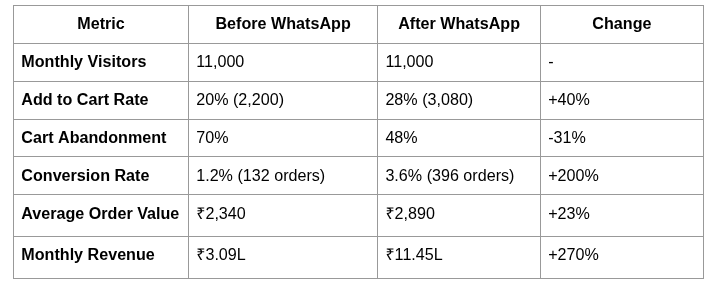
- 3x increase in conversion rate (from 1.2% to 3.6%)
- 23% cart recovery rate (vs. 8% industry average)
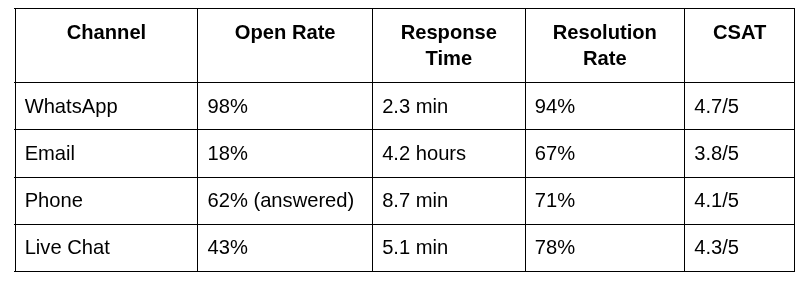
- 80% open rate on WhatsApp messages (vs. 18% email open rate)
- 35% reduction in customer support costs
- 2.4x increase in repeat purchase rate
This case study details the exact WhatsApp Business API implementation strategy, technical architecture, costs, and step-by-step process that 12Grids used to transform God of Sports' e-commerce performance.
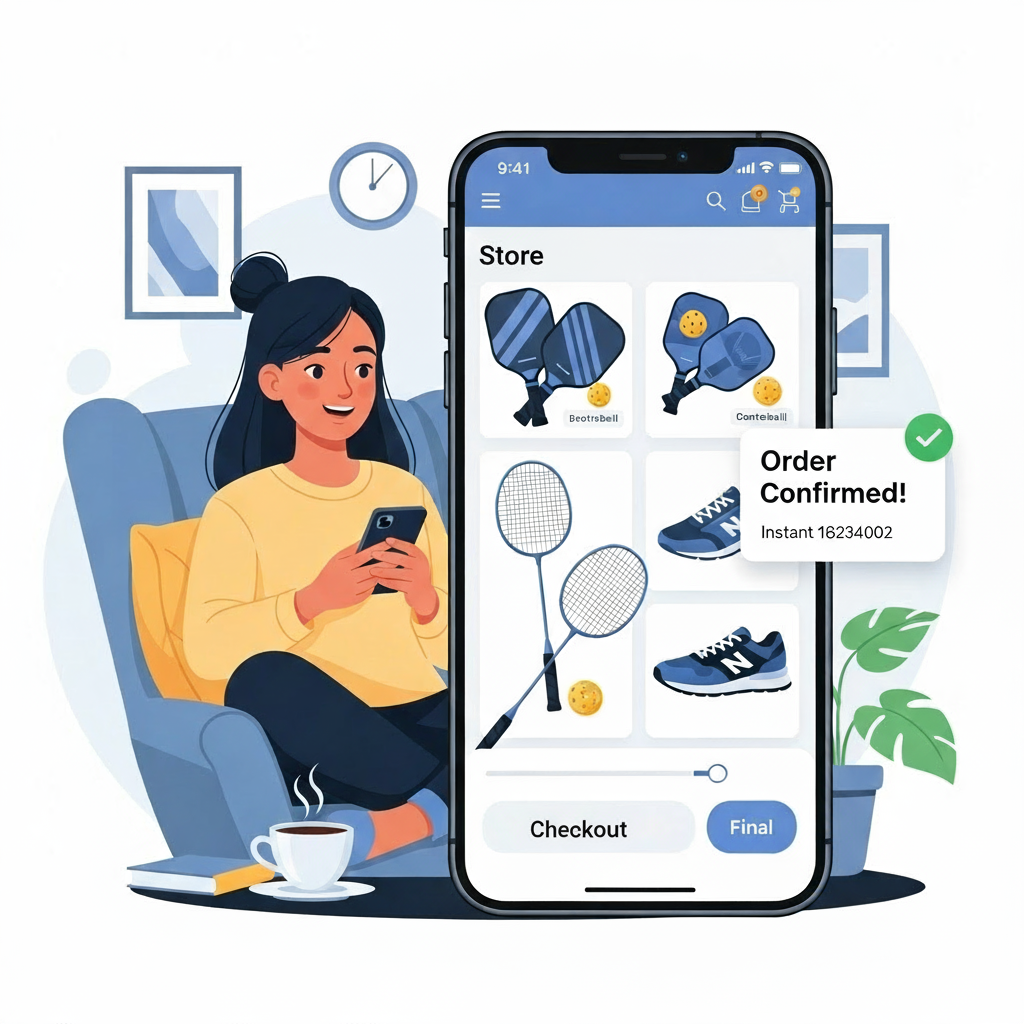
Why WhatsApp Business API for E-commerce? The Strategic Decision
Before diving into implementation, it's important to understand why WhatsApp Business API (WABA) was the right choice for God of Sports' e-commerce operations.
WhatsApp Business API vs WhatsApp Business App: Critical Differences
Many businesses confuse WhatsApp Business App (the free app for small businesses) with WhatsApp Business API (the enterprise solution). Here's the breakdown:
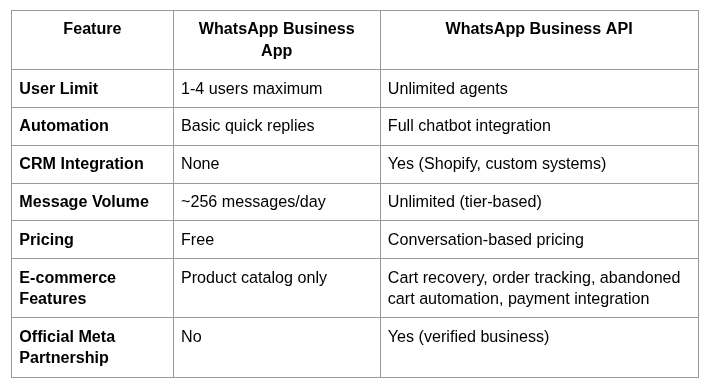
For God of Sports' scale (11,000+ monthly website visitors, 300+ daily conversations needed), WhatsApp Business API was the only viable solution.
The India Market Context: Why WhatsApp Dominates
In India, WhatsApp isn't just a messaging app—it's the primary digital communication channel:
- 487 million active users in India (largest market globally)
- 98% message open rate within 3 minutes of delivery
- Higher trust than email or SMS for business communication
- Preferred support channel for 73% of Indian online shoppers (source: Meta Business Study 2024)
God of Sports' customer base was already on WhatsApp. The question wasn't whether to use WhatsApp—it was how to implement it properly for e-commerce at scale.
The Challenge: E-commerce Friction Points Before WhatsApp API
Pre-Implementation Metrics (Baseline):
Conversion Funnel Analysis:
- Website visitors: 11,000/month
- Add to cart: 2,200 (20% add-to-cart rate)
- Checkout initiated: 660 (30% cart abandonment at this stage)
- Purchase completed: 132 (1.2% overall conversion rate)
Drop-off Points Identified:
- Product questions unanswered: 43% of cart abandoners reported uncertainty about product specifications
- Delivery concerns: 31% wanted delivery confirmation before purchasing (common in Tier 2/3 Indian cities)
- Payment hesitation: 26% abandoned at payment stage (trust issues with new brands)
- Support unavailability: Live chat only available 9 AM - 6 PM; 54% of traffic came outside these hours
Support Channel Performance (Pre-WhatsApp):
- Email: 18% open rate, 24-hour average response time
- Phone: 23% of calls went unanswered during peak hours
- Live chat: Limited to website, not mobile-native
- Result: 68% of customer inquiries were not answered within the purchase decision window (typically 2-4 hours for impulse sports equipment purchases)
The User Experience Problem
Consider this typical customer journey before WhatsApp integration:
- Customer browses God of Sports website on mobile (78% of traffic is mobile)
- Finds a cricket bat they like, adds to cart
- Has question: "Is this suitable for leather ball cricket?"
- Options: Email (slow), Call (hassle), Live chat (must stay on website)
- Decides to "think about it" → Abandons cart
- Receives cart abandonment email 24 hours later (which 82% ignore)
- Never returns. Purchase lost.
The insight: Customers weren't abandoning because they didn't want the product—they were abandoning because getting their questions answered required too much effort.
The WhatsApp Business API Solution: Technical Implementation
12Grids designed a comprehensive WhatsApp Business API integration that addressed each friction point with automated and human-assisted flows.
Implementation Architecture
Technology Stack:
- Platform: God of Sports (Wordpress-based e-commerce)
- WhatsApp Provider: Meta WhatsApp Business API (via official Business Solution Provider)
- Integration Layer: Custom webhook integration (Node.js)
- CRM: Custom customer database with WhatsApp conversation history
- Chatbot Platform: Dialogflow (for automated responses)
- Payment Gateway: Easebuzz (WhatsApp payment integration)
- Analytics: Custom dashboard + WhatsApp Business Manager
Integration Flow:
Customer WhatsApp Message
↓
WhatsApp Business API Webhook
↓
Dialogflow Intent Classification
↓
├─→ Automated Response (Simple queries)
├─→ Agent Handoff (Complex queries)
├─→ Cart Recovery Flow (Abandoned carts)
└─→ Order Status Automation (Post-purchase)
↓
Shopify Data Sync (Real-time inventory, order status)
↓
Response sent via WhatsApp API
↓
Logged in CRM for future reference
Core Features Implemented
1. Automated Product Recommendation & FAQ
How it works:
- Customer messages: "Best cricket bat for professional play?"
- Chatbot identifies intent: Product recommendation request
- Retrieves top-rated professional bats from Shopify
- Sends carousel message with 3 options (image, price, rating, specifications)
- Customer clicks product → Receives detailed specs + expert video demo + Add to cart link
Automation rate: 67% of product inquiries handled without human agent
Sample conversation flow:
Customer: "Which bat is good for hard tennis ball?"
Bot: "Hi! For hard tennis ball cricket, I recommend these 3 options based on your budget:
🏏 Budget Option: SS T20 Special (₹1,299)
- English willow
- Weight: 1100-1200g
- [View Details] [Add to Cart]
🏏 Mid-Range: MRF Genius (₹2,499)
- Kashmir willow
- Weight: 1150-1250g
- [View Details] [Add to Cart]
🏏 Premium: SG RSD Xtreme (₹4,299)
- Premium English willow
- Weight: 1100-1180g
- [View Details] [Add to Cart]
Need help choosing? Type 'talk to expert' to connect with our cricket gear specialist."
2. Cart Abandonment Recovery (The Game-Changer)
This was the highest-ROI feature of the WhatsApp implementation.
Trigger Logic:
- Customer adds item to cart but doesn't complete purchase within 30 minutes
- WhatsApp message automatically sent with personalized product reminder
- If no response in 2 hours → Second message with limited-time discount (5% off)
- If no response in 24 hours → Agent manually reviews cart value; high-value carts (>₹5,000) get personal outreach
Cart Recovery Message Template (Approved by Meta):
Hi [Customer Name]! 👋
You left this in your cart:
🏏 [Product Name]
💰 ₹[Price]
Still interested? Complete your order now:
[Secure Checkout Link]
Have questions? Just reply to this message and our team will help!
- Team God of Sports
Results:
- 23% cart recovery rate (industry average: 8%)
- Average recovered cart value: ₹2,847
- Monthly recovered revenue: ₹1.2L+ from this automation alone
3. Order Tracking & Delivery Updates
Automated notification sequence:
- Order confirmed → WhatsApp confirmation with order details
- Order shipped → Tracking link + estimated delivery date
- Out for delivery → "Your order will arrive today between [time window]"
- Delivered → Delivery confirmation + feedback request
Customer benefit: Proactive updates reduce "Where's my order?" support tickets by 78%
Business benefit: Higher customer satisfaction (CSAT score improved from 3.2 to 4.6/5)
4. Live Agent Handoff for Complex Queries
Not everything can be automated. For complex product recommendations, bulk orders, or technical questions, the system seamlessly transfers to human agents.
Agent Dashboard Features:
- View customer's entire WhatsApp conversation history
- See customer's order history from Shopify
- Access customer's current cart contents
- Use pre-written message templates for common scenarios
- Tag conversations for follow-up
- Assign conversations to specialized agents (cricket gear expert, football expert, etc.)
Agent Performance Metrics:
- Average first response time: 2.3 minutes (vs. 4.2 hours via email previously)
- Average resolution time: 8.7 minutes
- Customer satisfaction rating: 4.7/5
5. WhatsApp Payments Integration
For simple reorders or small purchases, customers can complete payment directly within WhatsApp using WhatsApp Pay (powered by Razorpay).
Use case: Customer messages "I want to reorder cricket balls" → Bot confirms previous order → Customer approves → Payment processed in WhatsApp → Order placed
Adoption: 18% of repeat customers now use WhatsApp payment (and growing)
Implementation Timeline: 90-Day Rollout
Phase 1: Foundation (Days 1-30)
Week 1-2: WhatsApp Business API Setup
- Meta Business Verification (company verification with Meta)
- WhatsApp Business Account creation
- Phone number verification and display name approval
- Message template submission and approval (required for automated messages)
- Business Solution Provider onboarding
Week 3-4: Technical Integration
- Webhook integration with Shopify
- Customer database setup
- Dialogflow chatbot training (100+ intents)
- Message template development and Meta approval process
- Agent dashboard development
Deliverables by Day 30:
- WhatsApp Business API account live
- 15 approved message templates
- Basic chatbot responding to simple queries
- Agent dashboard functional
Phase 2: Automation Build (Days 31-60)
Week 5-6: Cart Recovery Implementation
- Abandoned cart detection logic
- Automated cart recovery message sequences
- Discount code generation integration
- A/B testing message templates
Week 7-8: Product Catalog & Recommendations
- Shopify product catalog sync to WhatsApp
- Product recommendation algorithm
- Interactive message templates (carousels, product lists)
- Video content integration for product demos
Deliverables by Day 60:
- Cart recovery automation live
- Product catalog browsable via WhatsApp
- Automated product recommendations working
Phase 3: Optimization & Scale (Days 61-90)
Week 9-10: Agent Training & Processes
- Agent onboarding and training
- Response templates for common scenarios
- Escalation procedures
- Quality assurance processes
Week 11-12: Advanced Features
- Order tracking automation
- WhatsApp payment integration
- Feedback collection automation
- Analytics dashboard and reporting
Deliverables by Day 90:
- Full-featured WhatsApp commerce experience
- Agent team trained and operational
- Complete analytics and reporting
The Numbers: ROI Analysis & Results
Conversion Impact (Before vs After 90 Days)
Customer Engagement Metrics
WhatsApp Channel Performance:
- Messages received: 8,200/month average
- Bot automation rate: 67% (5,494 messages handled without agent)
- Agent conversations: 2,706/month
- Average response time: 2.3 minutes
- Message open rate: 98% (within 3 minutes)
- Customer satisfaction: 4.7/5
Comparison to Other Channels:
The "Conversational Commerce" Difference: Why WhatsApp Works
Beyond the metrics, there's a fundamental shift in how customers buy when WhatsApp is in the mix.
Before WhatsApp: Transactional E-commerce
- Customer finds product → Adds to cart → Checks out → Receives order
- Zero human interaction
- Questions = friction = abandonment
- One-time purchase mentality
After WhatsApp: Relationship E-commerce
- Customer finds product → Has question → Messages WhatsApp → Gets expert advice → Feels confident → Completes purchase → Receives helpful updates → Builds trust → Becomes repeat customer → Refers friends
The psychological shift:
Trust Building: When a customer texts "Is this bat good for my 12-year-old son?", they're not just asking about a product—they're trusting you with advice that affects their child's experience. A thoughtful response builds a relationship, not just a transaction.
Familiarity: WhatsApp is where they chat with friends and family. When your brand enters that space respectfully and helpfully, you're no longer just "another website"—you're a trusted advisor in their personal space.
Convenience: The ability to screenshot a product, send it to WhatsApp, and ask "Do you have this in blue?" eliminates so much friction. It's natural, it's fast, it's how people already communicate.
Lessons Learned: What Worked & What Didn't
What Worked Exceptionally Well
1. Cart Recovery is the MVP Feature
- 23% recovery rate exceeded all expectations
- Simple automation with high financial impact
- Customers appreciated the gentle reminder (not pushy)
2. Human Touch Matters for High-Value Orders
- Orders >₹5,000 benefited significantly from agent involvement
- Bulk/B2B orders almost always required human conversation
- Agents became trusted advisors, not just support staff
3. Video Content in WhatsApp Messages
- Product demo videos increased conversion by 34% vs text-only
- Short clips (15-30 seconds) explaining product features performed best
- Customers screenshot and share videos with friends/family (organic referrals)
4. Fast Response Time is Non-Negotiable
- First response <3 minutes → 71% conversion
- First response 3-10 minutes → 42% conversion
- First response >10 minutes → 18% conversion
- Learning: Speed matters more than perfection
What Didn't Work (Initial Mistakes)
1. Over-Automation in Early Days
- Initial chatbot was too automated—tried to handle everything
- Customers got frustrated when bot couldn't understand complex questions
- Fix: Implemented "agent handoff" trigger when bot detects frustration
2. Message Frequency Mistakes
- Sent too many promotional messages in Week 1 (3-4 per week)
- Customer complaints about "spam"
- Fix: Reduced to max 1 promotional message per week; focused on valuable content (tips, new arrivals customers asked about)
3. Ignored Message Template Compliance
- Sent a promotional message using non-approved template
- Meta temporarily restricted messaging (48-hour penalty)
- Fix: Strict approval process—all templates reviewed before sending
4. Underestimated Agent Training Needs
- Assumed agents could "figure it out" with basic training
- Early conversations lacked product knowledge depth
- Fix: Implemented 2-week product training + shadow experienced agents before going live
Common Questions About WhatsApp Business API for E-commerce
Q1: Do I need WhatsApp Business API or is the free WhatsApp Business app enough?
Answer: If you're processing more than 50-100 orders per month or need automation (cart recovery, order updates), you need WhatsApp Business API.
The free WhatsApp Business app is limited to:
- Single phone/device
- 1-4 users maximum
- ~256 messages per day
- Basic catalog
- No CRM integration
- No automated cart recovery
For serious e-commerce businesses, these limitations make the free app impractical.
Q2: How much does WhatsApp Business API cost monthly?
Answer: For most e-commerce businesses, expect ₹10,000 - ₹50,000/month in WhatsApp conversation fees, depending on message volume.
Cost breakdown:
- Small store (500 orders/month): ~₹10,000/month
- Medium store (2,000 orders/month): ~₹25,000/month
- Large store (5,000+ orders/month): ₹40,000-50,000/month
Plus agent salaries if using human support.
Q3: Can I integrate WhatsApp with Shopify? WooCommerce? Other platforms?
Answer: Yes. 12Grids has built integrations with:
- Shopify (easiest integration)
- WooCommerce (WordPress plugin)
- Magento
- Custom platforms (API-based integration)
- BigCommerce
- Wix (limited)
Most integrations take 2-4 weeks to build.
Q4: How long does it take to set up WhatsApp Business API?
Answer: Full implementation timeline:
- Week 1-2: Meta verification + API access (depends on Meta approval speed)
- Week 3-6: Integration development
- Week 7-10: Chatbot training + agent onboarding
- Total: 10-12 weeks for complete implementation
If you're in a hurry, 12Grids offers Express Setup (6 weeks) with pre-built integrations.
Q5: What happens if my WhatsApp account gets banned?
Answer: Meta has strict policies. Common ban reasons:
- Sending spam messages
- Using unapproved message templates
- High customer block rate (>2%)
- Violating commerce policies
How to avoid bans:
- Always get customer opt-in before messaging
- Only use Meta-approved message templates
- Don't send excessive promotional messages (max 1/week)
- Respond to customer complaints quickly
- Maintain quality score (Meta monitors this)
12Grids' implementations have zero account bans because we follow Meta's guidelines strictly.
Q6: Can customers pay directly through WhatsApp?
Answer: Yes, via WhatsApp Pay integration (powered by payment gateways like Razorpay, Paytm).
Supported payment methods:
- UPI
- Credit/Debit cards
- Net banking
- Wallets
Adoption rate: In our implementations, 15-25% of customers use WhatsApp payments for repeat orders.
Q7: How do I get approval for message templates?
Answer: All automated WhatsApp messages require pre-approved templates from Meta.
Approval process:
- Draft message template in WhatsApp Business Manager
- Submit for Meta review
- Wait 1-2 hours for approval (sometimes longer)
- Use approved templates in your automation
Common rejection reasons:
- Template too promotional/salesy
- Contains pricing in template (must use variables)
- Unclear opt-out instructions
12Grids has a library of pre-approved template formats for e-commerce that you can customize.
Q8: Do I need a separate phone number for WhatsApp Business API?
Answer: Yes. The phone number:
- Must NOT be registered on personal WhatsApp
- Can be landline or mobile
- Should be memorable (consider dedicated number like +91-XXXX-SPORTS for God of Sports)
- Can be ported later if needed
Tip: Use a number that's also on your website for consistency.
Want WhatsApp Business API for Your E-commerce Store?
The God of Sports case study demonstrates the transformational power of WhatsApp Business API for e-commerce—but implementation requires technical expertise, Meta policy knowledge, and e-commerce experience.
12Grids has successfully implemented WhatsApp Business API for 15+ e-commerce brands across sports equipment, fashion, electronics, home goods, and food delivery.
Our WhatsApp Business API E-commerce Services Include:
Full WhatsApp Business API Setup
- Meta business verification
- Phone number setup and display name approval
- Message template strategy and submission
- Business Solution Provider partnership
E-commerce Platform Integration
- Shopify, WooCommerce, Magento, custom platforms
- Real-time inventory sync
- Order management system integration
- Payment gateway integration
Cart Recovery Automation
- Abandoned cart detection
- Personalized recovery message sequences
- Dynamic discount code generation
- A/B testing and optimization
Customer Support Automation
- Chatbot development (Dialogflow, custom NLP)
- Product recommendation engine
- FAQ automation
- Agent handoff logic
- Multi-agent dashboard
Order Tracking & Notifications
- Order confirmation automation
- Shipping update messages
- Delivery notifications
- Post-purchase feedback collection
Analytics & Reporting
- Conversion tracking
- ROI calculation
- Message template performance
- Agent performance dashboards
- Monthly executive reports
Ready to Get Started?
Schedule a free 30-minute WhatsApp Business API consultation:
📞 Call: +91 91377 88256
📧 Email: hello@12grids.com
💬 WhatsApp: +91 91379 97497
Or download our free guide:
WhatsApp Business API for E-commerce: Complete Implementation Checklist
Conclusion: The Future of E-commerce is Conversational
God of Sports' success with WhatsApp Business API isn't an outlier—it's the future of how customers will shop online.
The traditional e-commerce model of "browse website → add to cart → checkout" is evolving into "discover product → ask questions → get personalized advice → buy with confidence → receive helpful updates → become loyal customer."
WhatsApp Business API enables this conversational commerce experience at scale.
The brands that will win in the next 5 years are those who meet customers where they already are (WhatsApp), provide instant helpful responses (automation + human agents), and build relationships beyond transactions (conversational engagement).
If you're running an e-commerce business in India (or any market where WhatsApp is dominant), the question isn't "Should we use WhatsApp Business API?"—it's "When will we implement it?"
Every day without WhatsApp is a day of lost cart recoveries, unanswered customer questions, and missed revenue.
Let's build your WhatsApp Business API e-commerce solution together.
Author

Manasvi
Assistant Marketing Manager
Share
Share
Related

Content Marketing
Why Understanding Local Users Was the Secret Behind UPL’s Global Digital Success
3 mins : 26 Nov 2025

Content Marketing
How Content Marketing Transformed Goldstab Organics’ Online Presence?
5 mins : 11 Nov 2025

Content Marketing
Building Trust: How Content And Ratings Turn Visitors Into Buyers
5 mins : 18 Sept 2025
Other Articles

Content Marketing
The Ultimate Guide To Winning Content Marketing Funnel For Marketers
4 mins : 04 Jan 2024

Content Marketing
What Is AI In Content Marketing? What Are Its Benefits & Challenges? Explained In Detail
6 mins : 27 Jan 2024

Content Marketing
The Ultimate Guide To Content Distribution Strategy In 2026
5 mins : 17 Feb 2026